

Do consumers care about how a company treats its employees? The answer is yes, and this information can have a big impact on customers’ feelings toward the brand, according to new research by Huron’s own Dr. Maxwell-Smith.
In 2020, the popular mantra for companies is that corporate social responsibility is good for the bottom line. As part of this, companies are often advised to treat their employees well, so that they will, in turn, treat customers well.
However, many consumers have little or no interaction with most of the employees of the company from which they purchase a product or service. So, what happens when consumers learn about how a company treats employees who they have never met, or likely will never meet? Does this information affect consumers’ feelings towards the company’s brand?
When Huron professor Matthew Maxwell-Smith began researching these questions, he found conflicting results. “Some survey polls and academic research suggested consumers care more about product quality than anything, whereas other studies suggested employee treatment is considered. There was no causal evidence about how consumers’ brand attitudes are affected.”
“This was surprising when you consider how important brand image is to companies, and how easy and common it is nowadays for consumers to go online and learn about how employees they’ve never met (i.e., ‘unfamiliar’ employees) are treated by well-recognized firms.”
Led by Dr. Maxwell-Smith, he and his collaborators at the University of Illinois conducted experiments investigating consumers’ feelings and intentions towards the brand of a company after they learned about its positive or negative treatment of unfamiliar employees. Participants in these experiments were presented with, for example, testimonials from current or former employees, news media stories, or the types of corporate social responsibility index reports and rankings that are accessible through the web or phone apps.
“We weren’t sure what to expect. Our original prediction was that ideological beliefs regarding the value of equality between social groups would be the sole factor that identifies which consumers would be influenced the most by employee treatment,” said Professor Maxwell-Smith.
The results of these experiments were clear: “The treatment of employees has a huge impact on consumers’ brand attitudes and purchasing intentions.”
Three experiments revealed a clear causal connection: favourable employee treatment led to more positive brand attitudes, while unfavorable treatment led to negative brand attitudes. One study further showed the same results regarding purchase intentions toward the brand.
“What’s interesting is that participants’ initial brand attitudes had no impact. So it’s not like participants were defending or vilifying their favourite or least-preferred brands,” Dr. Maxwell-Smith said.
The strongest reactions to this information were from consumers who were ideologically inclined toward seeking equal versus hierarchical, top-down relationships between societal groups. The impact of employee treatment on brand attitudes was MUCH larger than expected.
“The effects of perceived employee treatment on brand attitudes were some of the largest effect sizes I’ve come across,” Dr. Maxwell-Smith said. “That means, information about employee treatment has a lot of potential for impacting brand attitudes in a positive or negative way.”
Where do we go from here?
“More research in this area needs to be done,” Dr. Maxwell-Smith said. “For example, it’s unclear how long changes in brand attitudes last after learning about employee treatment. There may also be other factors, such as how far people are along in the purchase decision process, or how financially dependent they are on certain brands or stores.”
Professor Maxwell-Smith plans to recruit Huron students to help him with future research in this area.
“In 2020, I anticipate starting a research lab dedicated to social issues related to marketing and consumer behaviour,” Dr. Maxwell-Smith said. “I’m looking forward to getting undergraduate students involved in this work.”
More about Dr. Maxwell-Smith
Huron BMOS Professor Matthew Maxwell-Smith conducts research on ethical consumption, particularly, how ideology and competition affect support for environmentally- or socially sustainable choices. He teaches courses on Marketing, Consumer Behaviour, and Psychology at Huron.
The research described in this story is to appear in the March 2020 Volume 109 issue of the peer-reviewed Journal of Business Research.


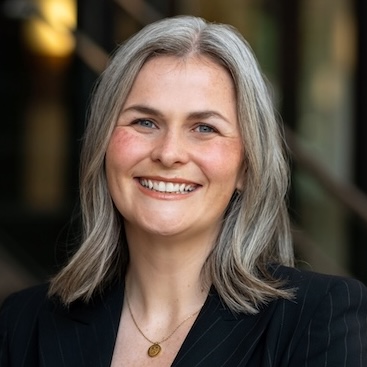

 Lisa Jones Keenan is the Vice President of Sales at Xplornet Communications, the largest rural fixed wireless broadband service provider in Canada.
 Leigh Allen is the AVP, Global Strategic Research, Reinsurance Group of America Inc., one of the world’s largest global life and reinsurance companies.
 Yola Ventresca is a Managing Partner, Lerners LLP, Secretary of Huron’s Board of Governors and a Huron Class of ’02 alumni. Selected as one of Canada’s “Best Lawyers,” she is passionate about the value of Liberal Arts in helping students succeed in their careers.
 Susan Farrow is an Assistant Professor in The Temerty Faculty of Medicine at the University of Toronto and a Founding Partner and Co-Director of The Toronto Institute of Group Studies, an organization offering certified training and education in group leadership.
  Frank Holmes is CEO and Chief Investment Officer of U.S. Global Investors, as well as a business commentator, philanthropist and Huron Class of ‘78 alumnus. Holmes also serves as the Executive Chairman of HIVE Blockchain Technologies, the first cryptocurrency mining company to go public in 2017.
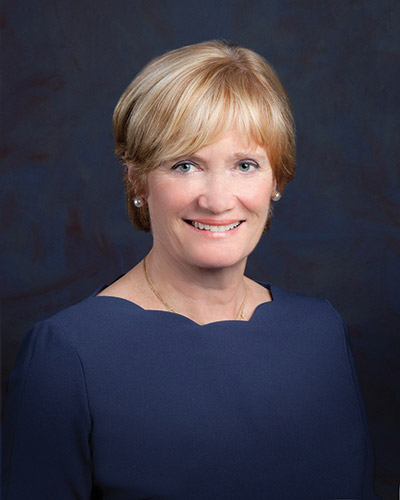 Kelly Meighen is an experienced philanthropist and volunteer. In her role as president of the T.R. Meighen Family Foundation, she has created a legacy of volunteerism and philanthropic giving in the areas of youth mental health advocacy, environmental conservation and cultural vibrancy.
  Ranjita is Executive Chair of the Oxford Global Partnership, advising investors, businesses, family offices and entrepreneurs on sustainable, inclusive and responsible value creation. A Business Fellow at Oxford University’s Smith School, Ranjita engages with companies on pursuing value with values, and teaches a postgraduate “Essentials of ESG & DEI” course.
 Caleb Hayhoe is the Founder & Chairman of Flowerdale Group and a Huron Class of ’85 Alumnus. Flowerdale Group is a Hong Kong based family office with a global investment outlook across public markets, real estate and private investment. Hayhoe previously spent over ten years building a global sourcing business together with an exceptional team, and remains committed to entrepreneurialism and helping great ideas become sustainable companies.