

Professor and Director, Centre for Global Social Innovation
I approach teaching as the cultivation of events in which we may confront the responsibilities we have as knowers, embrace the value of dis- and re-orientations in our learning, and become highly skilled in ethical scholarly practices.
Huron University is unique in Canada because of its Centre for Global Social Innovation. The Centre provides multiple academic programs through which students have opportunities for truly interdisciplinary, critical, and collaborative forms of study and engagement with the world that are unequaled at other institutions. Students are able to critically situate their own lives and responsibilities in the world with respect to problems of poverty, inequalities, self–determination, migration, patriarchy, sexism, racism, decoloniality, economic development, capitalism, sustainability, community, memory, extractivism, and politics of resistance.
Degrees:
- PhD, Political Science, The Johns Hopkins University
- MA, Contemporary Social & Political Thought, The University of Victoria
- BA, Philosophy, The University of Victoria
- BA, History, The University of Victoria
Summary of Research:
- Contest of Rights in Human Movement and Migration
- Refugee Studies
- Spatial Politics of Automobility in Bicycling
- Aesthetics in Political Geography
- Politics of Critique in Immanuel Kant and International Relations Theory
- Simulation Techniques in Experiential Learning
- Law, Movement, and Biopolitics
Publications:
Books
Withdrawal from Immanuel Kant and International Relations: The Global Unlimited (Routledge, 2024).
Global Limits: Immanuel Kant, International Relations, and Critique of World Politics
(Albany: State University of New York Press, 2001).
Journal Articles & Book Chapters
“Refugees’ Loss of Self-Determination in UNHCR Operations through the Gaining of Identity in Blockchain Technology,” Politics, Groups, and Identities, Vol. 10, No. 1 (2022) pp. 21-40.
“The Patronising Kantianisms of Hospitality Ethics in International Relations: Toward a Politics of Imposition,” Journal of International Political Theory, Vol. 17, No. 3 (2021) pp. 276-294.
“Citizens’ Auto-affection in the Pedagogy of ‘Playing Refugee’: Simulating the Experience of Others from Oneself, for Onself,” Transformations: The Journal of Inclusive Scholarship and Pedagogy, Vol. 30, No. 1 (2020) pp. 16-34.
“Internalities of International Relations and the Politics of Externalities: Affirming the Impossibility of IR with Esposito,” in Antonio Calcagno and Inna Viriasova, eds., Roberto Esposito: Thinking Biopolitics and Philosophy (SUNY Press, 2018), pp. 201–217.
“Politics of Re-radicalising the Deracinated as Invasive Species: Human Displacement, Environmental Disasters of State Enclosure, and the Irradicability of Biodiversity,” in Jennifer Lawrence and Sarah M. Wiebe, eds., Biopolitical Disaster (Routledge, 2018), pp. 113–134.
“Theorising the Right to Be Political in Motion: khôra as Condition of Possibility,” special issue on “Migratory Crises and Political Conceptions of Human Movement,” Revista Colombia Internacional, No. 88 (2016), pp. 79 – 106.
“UNHCR’s Territorial Depoliticisation of Forced Displacement Through the Governance Mechanisms of Participatory Geographical Information Systems,” Territory, Politics, Governance, Vol 4, No. 4 (2016), pp. 421 – 437.
“A Critique of the Universalisability of Critical Human Rights Theory: The Displacement of Immanuel Kant,” Human Rights Review, Vol. 14, No. 4 (2013), pp. 367–385.
“The Unbearable Rightfulness of Being Human: Citizenship, Displacement, and the Right to Not Have Rights,” Citizenship Studies, Vol. 15, No. 1 (2011), pp. 39–56.
“Epistemic Virtue in the Assessment of Claims to Refugee Status,” with Jill Rusin, The Global Studies Journal Vol. 3, No. 2 (2010), pp. 185–194.
“Self-Understanding and the Refugee Claimant,” with Jill Rusin, International Journal of the Humanities Vol. 8, No. 3 (2010), pp. 187–198.
“Responsible Politics of the Neutral: Rethinking International Humanitarianism in the Red Cross Movement via the Philosophy of Roland Barthes,” Journal of International Political Theory, Vol. 6, No. 2 (2010), pp. 142–160.
“The Political Stakes of Indigenous Diplomacies: Questions of Difference,” in
J. Marshall Beier ed., Indigenous Diplomacies (New York: Palgrave Macmillan, 2009), pp. 47–60.
“Political Exclusion of Refugees in the Ethics of International Relations” in Patrick Hayden, ed., Ashgate Research Companion to Ethics and International Relations (Farnham: Ashgate Publishing, September 2009), pp. 309–327.
“Refugee Registration as Foreclosure of the Freedom to Move: the Virtualisation of Refugees’ Rights in Maps of International Protection,” Environment and Planning D: Society and Space, Vol. 27, No. 2 (2009), pp. 352–369.
“The Displacement of the Rights of Displaced Persons: An Irreconciliation of Human Rights Between Place and Movement,” Journal of Human Rights, Vol. 7, No. 3 (2008), pp. 262–281.
“Self–Determination Versus the Determination of Self: A Critical Reading of the Colonial Ethics Inherent to the United Nations’ Declaration on the Rights of Indigenous Peoples,” Journal of Global Ethics Vol. 3, No. 3 (2007), pp. 359–379.
“Refusing an Ethical Approach to World Politics in Favour of Political Ethics,” European Journal of International Relations Vol. 6, No. 3 (2000), pp. 307–333.
“Immanuel Kant and the (Im)Possibility of International Relations Theory,” Alternatives: Social Transformation and Humane Governance Vol. 21, No. 3 (1995), pp. 279–322.


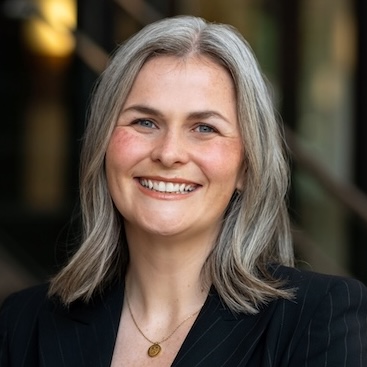
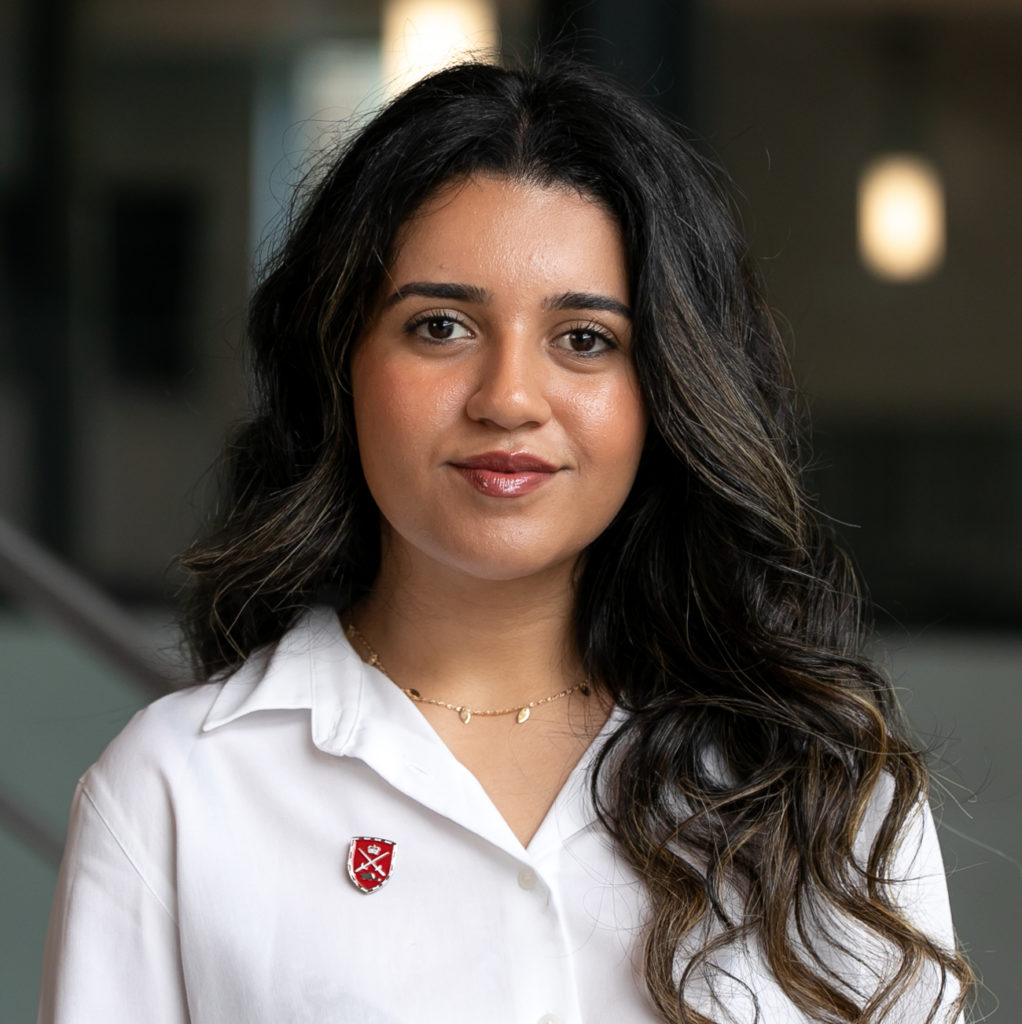
 Lisa Jones Keenan is the Vice President of Sales at Xplornet Communications, the largest rural fixed wireless broadband service provider in Canada.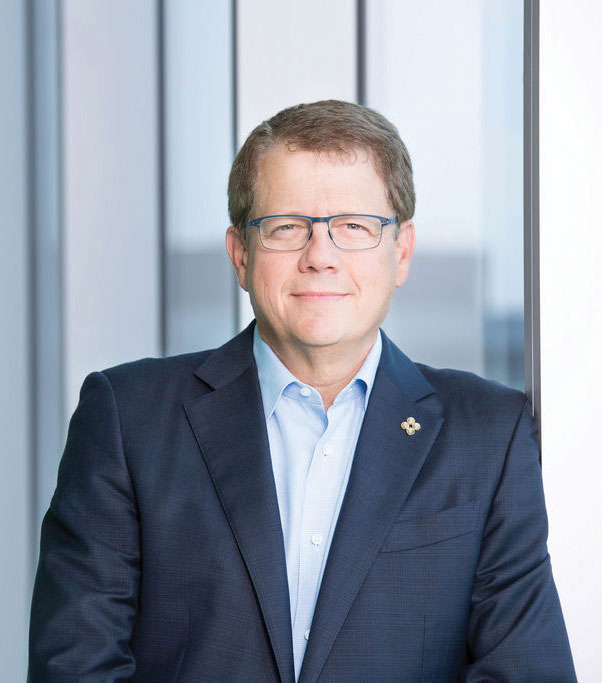
 Leigh Allen is the AVP, Global Strategic Research, Reinsurance Group of America Inc., one of the world’s largest global life and reinsurance companies.
 Yola Ventresca is a Managing Partner, Lerners LLP, Secretary of Huron’s Board of Governors and a Huron Class of ’02 alumni. Selected as one of Canada’s “Best Lawyers,” she is passionate about the value of Liberal Arts in helping students succeed in their careers.
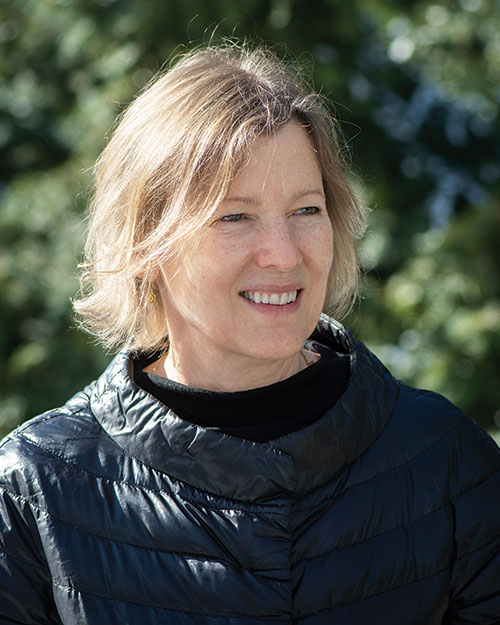 Susan Farrow is an Assistant Professor in The Temerty Faculty of Medicine at the University of Toronto and a Founding Partner and Co-Director of The Toronto Institute of Group Studies, an organization offering certified training and education in group leadership.
 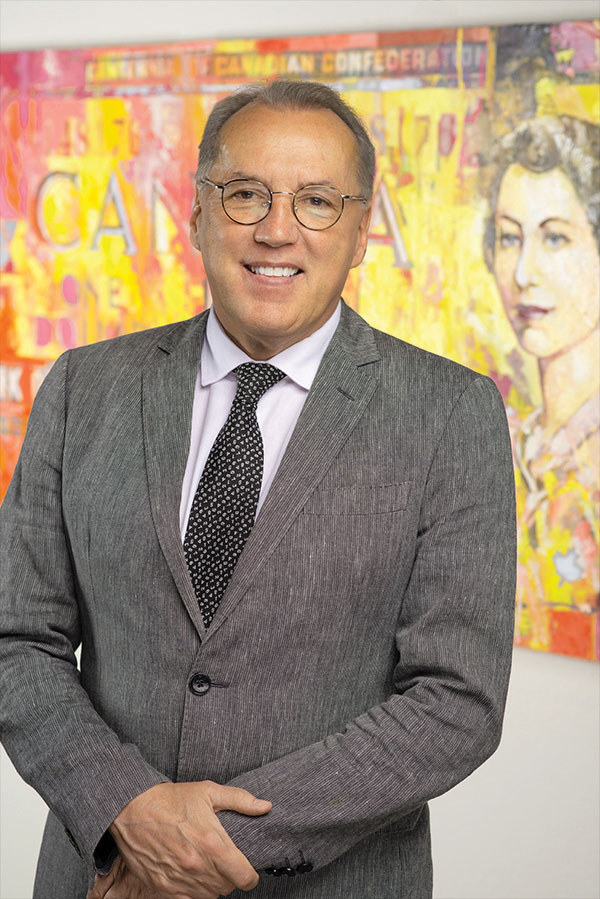 Frank Holmes is CEO and Chief Investment Officer of U.S. Global Investors, as well as a business commentator, philanthropist and Huron Class of ‘78 alumnus. Holmes also serves as the Executive Chairman of HIVE Blockchain Technologies, the first cryptocurrency mining company to go public in 2017.
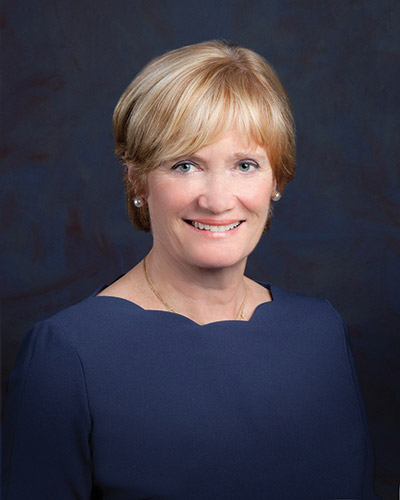 Kelly Meighen is an experienced philanthropist and volunteer. In her role as president of the T.R. Meighen Family Foundation, she has created a legacy of volunteerism and philanthropic giving in the areas of youth mental health advocacy, environmental conservation and cultural vibrancy.
 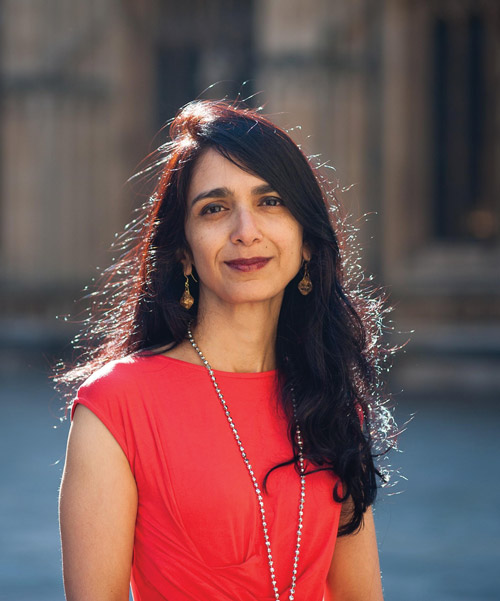 Ranjita is Executive Chair of the Oxford Global Partnership, advising investors, businesses, family offices and entrepreneurs on sustainable, inclusive and responsible value creation. A Business Fellow at Oxford University’s Smith School, Ranjita engages with companies on pursuing value with values, and teaches a postgraduate “Essentials of ESG & DEI” course.
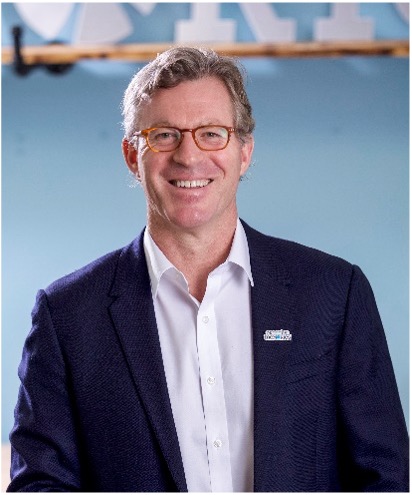 Caleb Hayhoe is the Founder & Chairman of Flowerdale Group and a Huron Class of ’85 Alumnus. Flowerdale Group is a Hong Kong based family office with a global investment outlook across public markets, real estate and private investment. Hayhoe previously spent over ten years building a global sourcing business together with an exceptional team, and remains committed to entrepreneurialism and helping great ideas become sustainable companies.