

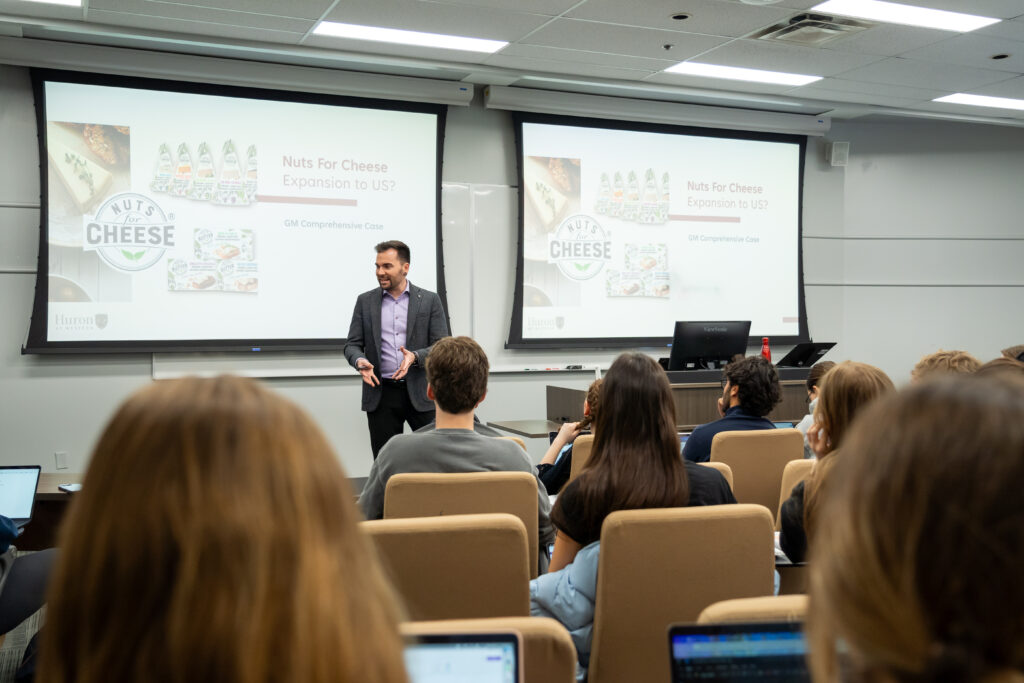
At Huron, business education begins with real stories and real impact. In the Management and Organizational Studies (MOS) program, students don’t just read about business challenges; they help shape the cases that future learners will study. At the core of the program is a faculty-led commitment to experiential, community-minded business education. Rather than relying solely on published case materials, faculty have intentionally built an in-house case development project that allows students to engage with relevant and current business stories from the outset of their studies.
How Writing Business Cases In-House Gives Huron Students an Edge
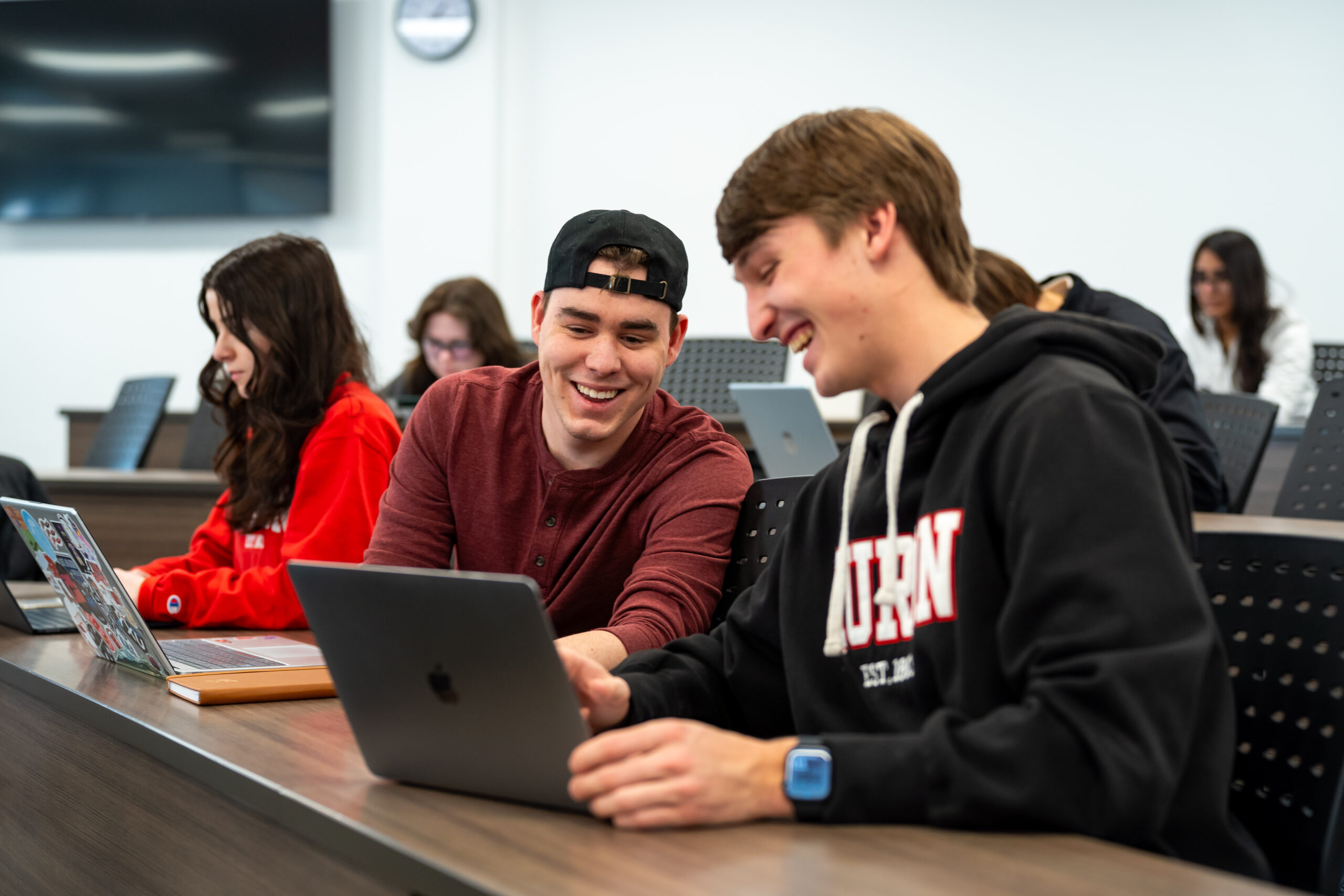
The goal of this project has always been to make business education more inclusive, relevant, and accessible. Faculty are reimagining the case method to reflect a wider range of business models and leaders, including social enterprises, non-profit organizations, and businesses led by diverse entrepreneurs. These cases better represent the values of Huron’s student community and prepare learners to think critically about the challenges and opportunities facing organizations today.
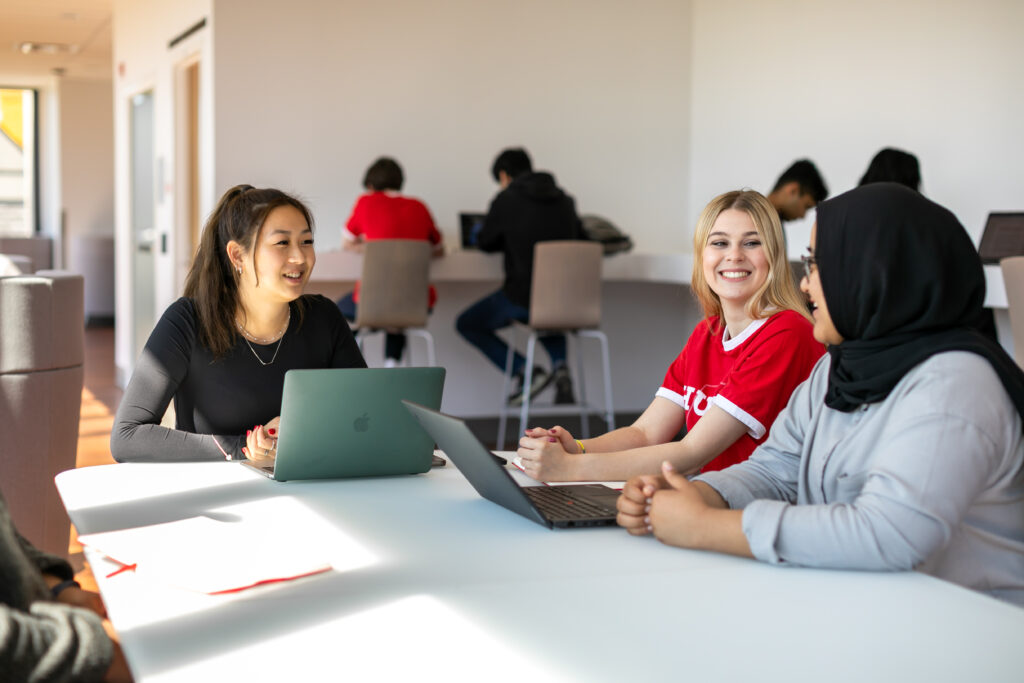
At Huron, students learn from current, relevant cases that support a holistic approach to learning, grounded in a liberal arts education. In the classroom, students analyze real organizational challenges, discuss potential strategies, and make informed decisions while collaborating with their peers.
Collaboration Builds Better Cases
Every case is built through a deeply collaborative process. Faculty, student research assistants, and local business owners work together to tell real, timely business stories. Faculty ensure the material aligns with course content, while Huron’s Library and Learning Services supports the development process. This includes editing, design, and publishing expertise, led by Digital Scholarship Librarian Ryan Rabie. The result is a professional, accessible, and distinctly Huron learning resource.
Developed as an open educational resource (OER), these cases can be freely accessed and adapted for teaching and learning.
Upper-year students play a key role in mentoring and research by co-authoring and helping publish new cases. This gives students hands-on experience that stands out in both academic and professional settings.
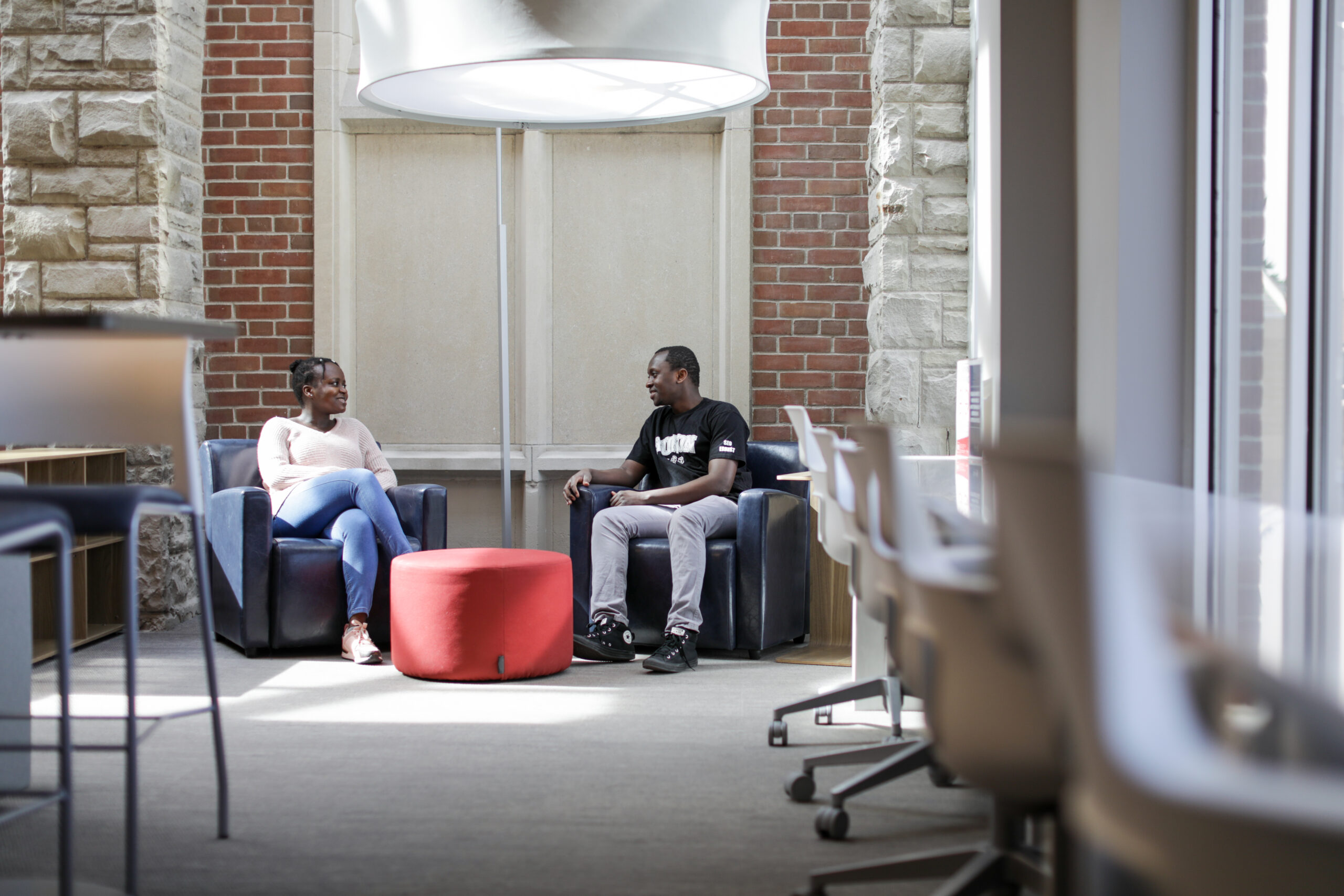
Publishing these cases in-house through the Library helps reduce the cost of course materials by eliminating the high licensing fees typically charged by external publishers. In the last three years, the cost of case materials for MOS students has decreased by approximately 30% through the use of in-house, open educational resources. Students save through open-source publishing while engaging with professional, high-quality learning materials.
Several cases have been adapted for use in workshops and case competitions with secondary school students and educators, demonstrating the broader impact of this initiative.
“When students help build the cases they learn from, business education becomes more meaningful. Instead of memorizing theories, they’re applying them in real time alongside faculty, based on the experiences of community partners. This project gives our students a level of confidence and practical insight that isn’t generally possible through traditional textbooks.” – Richard Bloomfield, Assistant Professor, MOS Program
Recent Cases and Student Advantages
One case example highlights Boomerz Boxing Club, a local gym founded by five entrepreneurs committed to supporting underprivileged youth through affordable membership programs and partnerships with Youth Opportunities Unlimited (YOU). YOU helps local youth reach their full potential through employment, housing, and community connections. Partnerships like these allow students to engage directly with community organizations while applying what they learn in the classroom.
Through the in-house case development project, students experience business education as active, collaborative, and rooted in relevant and current business contexts. This hands-on approach equips students with the critical thinking, communication, and problem-solving skills that employers value most. The result is learning that extends beyond the classroom and prepares students to contribute thoughtfully and effectively in professional settings. Shaped by dedicated faculty, including Richard Bloomfield, AJ Miller, Shahin Pardhan, Joe Gilvesy, and Lauren Nicolaas, and strengthened through community partnerships, this approach reflects what distinguishes Huron’s MOS program: preparing students not only to succeed in business, but to lead with purpose in a world that needs thoughtful, ethical decision-makers.



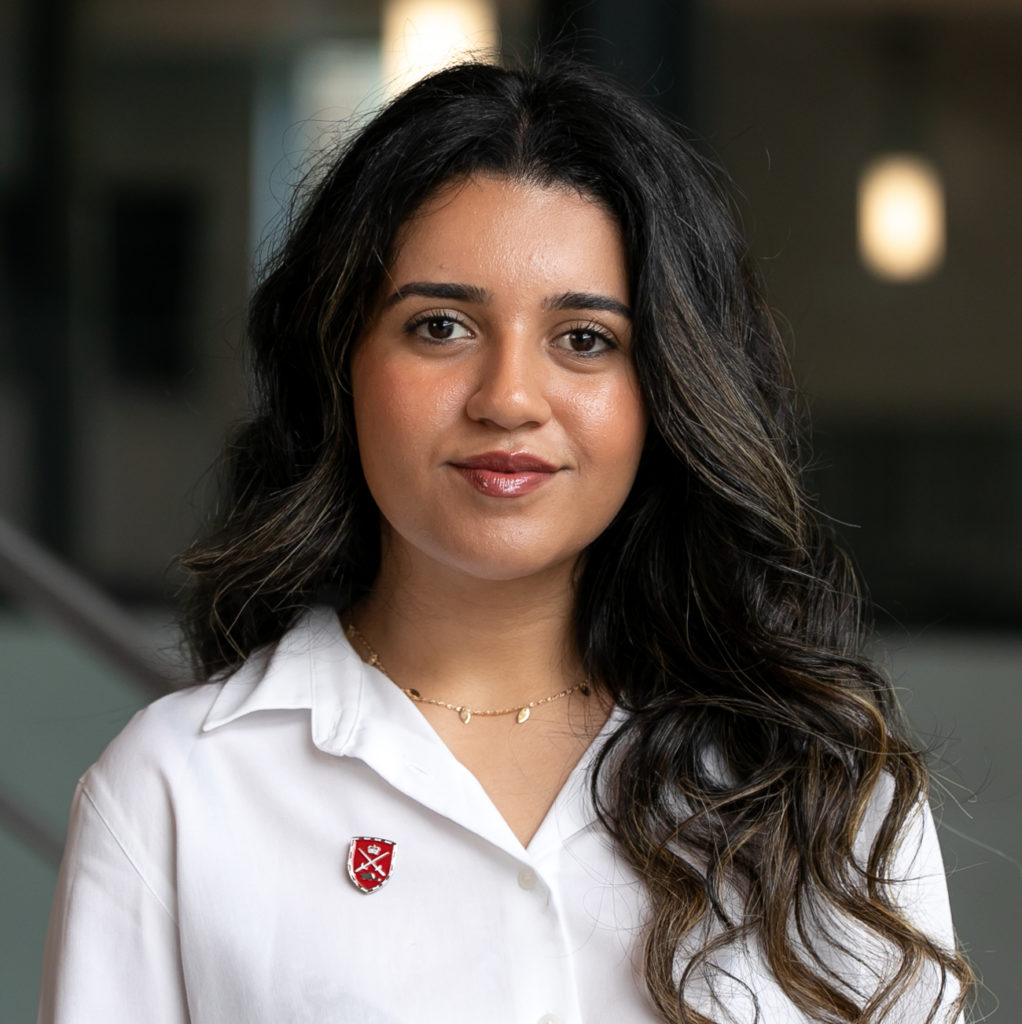
 Lisa Jones Keenan is the Vice President of Sales at Xplornet Communications, the largest rural fixed wireless broadband service provider in Canada.
 Leigh Allen is the AVP, Global Strategic Research, Reinsurance Group of America Inc., one of the world’s largest global life and reinsurance companies.
 Yola Ventresca is a Managing Partner, Lerners LLP, Secretary of Huron’s Board of Governors and a Huron Class of ’02 alumni. Selected as one of Canada’s “Best Lawyers,” she is passionate about the value of Liberal Arts in helping students succeed in their careers.
 Susan Farrow is an Assistant Professor in The Temerty Faculty of Medicine at the University of Toronto and a Founding Partner and Co-Director of The Toronto Institute of Group Studies, an organization offering certified training and education in group leadership.
  Frank Holmes is CEO and Chief Investment Officer of U.S. Global Investors, as well as a business commentator, philanthropist and Huron Class of ‘78 alumnus. Holmes also serves as the Executive Chairman of HIVE Blockchain Technologies, the first cryptocurrency mining company to go public in 2017.
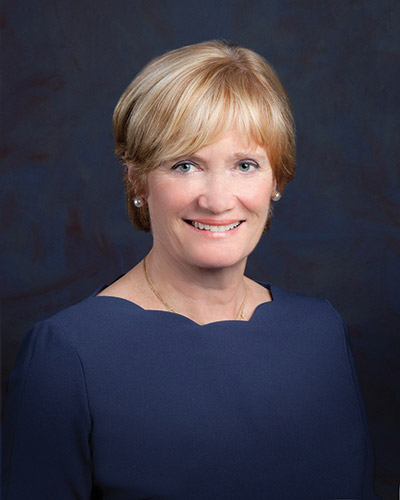 Kelly Meighen is an experienced philanthropist and volunteer. In her role as president of the T.R. Meighen Family Foundation, she has created a legacy of volunteerism and philanthropic giving in the areas of youth mental health advocacy, environmental conservation and cultural vibrancy.
  Ranjita is Executive Chair of the Oxford Global Partnership, advising investors, businesses, family offices and entrepreneurs on sustainable, inclusive and responsible value creation. A Business Fellow at Oxford University’s Smith School, Ranjita engages with companies on pursuing value with values, and teaches a postgraduate “Essentials of ESG & DEI” course.
 Caleb Hayhoe is the Founder & Chairman of Flowerdale Group and a Huron Class of ’85 Alumnus. Flowerdale Group is a Hong Kong based family office with a global investment outlook across public markets, real estate and private investment. Hayhoe previously spent over ten years building a global sourcing business together with an exceptional team, and remains committed to entrepreneurialism and helping great ideas become sustainable companies.