

Dr. Brett Potter
In Rafael Lozano-Hemmer’s Border Tuner, a large work of public art which ran for twelve days in 2019, narrow beams of light extend up into the sky, intersecting high above the border between El Paso, Texas, USA and Ciudad Juárez, Mexico. A person standing at one of the ‘stations’ at the base of the light – one in each country – can move the beams around with a simple metal dial. When two beams cross, a small microphone and speaker automatically switches on, allowing them to have a conversation (in Spanish or English) with someone on the opposite side of the border. Whether the dialogue turned to shared stories of grief, to singing pop songs, or talking about families, romance, and/or politics, this innovative work of art was for those who experienced it a visual manifestation of the deep connection between the two cities and the people who live in them – particularly in the context of the increasingly militarized and impermeable U.S.-Mexico border.
As in Lozano-Hemmer’s other immersive installations, these beams of light crossing in the night sky are transient and unstable; like a breath, a spoken word, or a fleeting emotion, the connections between the lights can suddenly fade into the night air. But even in their ephemerality, the lights are a sign of the human propensity to transgress borders – and more broadly, a reminder of our shared humanity.
Light is a phenomenon with rich theological overtones. The universe begins – and ends – in light. From the primordial light spoken into existence by the Creator in the first few lines of Genesis, to the radiant city in Revelation where the Sun is obsolete, the Scriptures are full of references to light, illumination, and brightness. The apostles are blinded by Taboric light as they see the transfigured form of Jesus, while a similar, unearthly luminescence blinds Saul of Tarsus on the road to Damascus.
Perhaps it is the ephemeral quality of light which makes it such a compelling metaphor for our experience of the divine. Neither a wave nor a particle, yet with elements of both, it moves between the stars and refracts into infinite arrays of colour – only a narrow band of which can be perceived by human eyes. There are some objects which are so bright that they overwhelm our faculties of perception. In the writings of Basil of Caesarea, to perceive the glory of God is like staring into the sun; we can only turn our eyes to the reflection of the sun in the water, so we will not be blinded. But even as we see in part, we are filled with divine radiance, like glass vessels or stained-glass windows blazing with colour: “When a ray of light falls upon clear and translucent bodies, they are themselves filled with light and gleam with a light from themselves.”
Our understanding of the human being – what theologians call a “theological anthropology” – must make room for an understanding of us as “translucent bodies.” We do not generate our own light, but are illuminated by the eternal light of God. In Eastern Orthodox theology, this is the process of divinization – the transfiguration of the human being into the likeness of God, becoming more transparent to the uncreated Taboric light. It is a way of speaking of experience as illumination – the path to growing in our consciousness of inbreaking divine grace by opening the “eyes of our hearts” (Eph. 1:18).
Still, in this world of borders and boundaries light is impermanent and elusive. Theological anthropologies of light and glory have to connect with the real world – one where our connectedness to each other, and to God, is troubled. We seem to be living in an age of ignorance and fear rather than one where humans are filled to capacity with the light of God.
Art can often teach us about theology. In this case, Border Tuner is a reminder of the striking power of light in the darkness. This light is the light of knowledge and understanding, which helps dispel misconceptions. But perhaps most importantly it is the light of truth, which exposes ideologies of division and xenophobia as mere shadows. Perhaps this is why Lozano-Hemmer’s installation is so compelling – the light which shone in the darkness over El Paso was a brief, temporary glimpse at a renewed world of human relationships. In its own way, it is a healing light; a spontaneous and joyous connectivity that cannot be contained by lines on a map. It reminds us of both the opaque borders which separate us from each other, and for the need to dissolve such borders even within our own selves.
What does this mean for a theological anthropology? Perhaps it reveals that borders – between countries and cities, or between the heavenly and the earthly – are transcended by the radiant Lux Aeterna of God. Light is a way of articulating our experience of God, a metaphor which shapes our imaginations from the bright array of the sun over a lake to the refracted blues and greens of a stained-glass window. We speak of God as Light because there is something about light that helps us see the truth of the way things are.
As Basil wrote, those translucent ones who have been illuminated by the Spirit not only radiate divine light but “send forth grace to others,” sharing divine love like beams of light crossing in the sky. A theology of the human being must be open to this transfiguring radiance, seeing connection and relationship as fundamental to what it means to let the light shine through.




 Lisa Jones Keenan is the Vice President of Sales at Xplornet Communications, the largest rural fixed wireless broadband service provider in Canada.
 Leigh Allen is the AVP, Global Strategic Research, Reinsurance Group of America Inc., one of the world’s largest global life and reinsurance companies.
 Yola Ventresca is a Managing Partner, Lerners LLP, Secretary of Huron’s Board of Governors and a Huron Class of ’02 alumni. Selected as one of Canada’s “Best Lawyers,” she is passionate about the value of Liberal Arts in helping students succeed in their careers.
 Susan Farrow is an Assistant Professor in The Temerty Faculty of Medicine at the University of Toronto and a Founding Partner and Co-Director of The Toronto Institute of Group Studies, an organization offering certified training and education in group leadership.
  Frank Holmes is CEO and Chief Investment Officer of U.S. Global Investors, as well as a business commentator, philanthropist and Huron Class of ‘78 alumnus. Holmes also serves as the Executive Chairman of HIVE Blockchain Technologies, the first cryptocurrency mining company to go public in 2017.
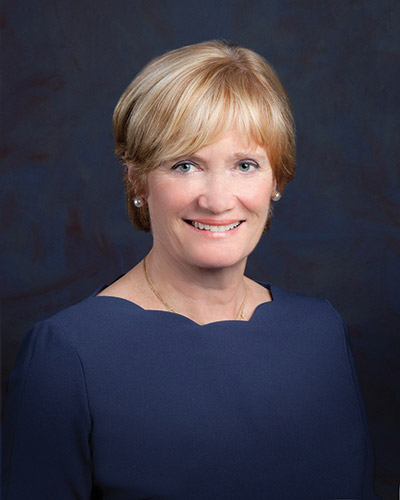 Kelly Meighen is an experienced philanthropist and volunteer. In her role as president of the T.R. Meighen Family Foundation, she has created a legacy of volunteerism and philanthropic giving in the areas of youth mental health advocacy, environmental conservation and cultural vibrancy.
  Ranjita is Executive Chair of the Oxford Global Partnership, advising investors, businesses, family offices and entrepreneurs on sustainable, inclusive and responsible value creation. A Business Fellow at Oxford University’s Smith School, Ranjita engages with companies on pursuing value with values, and teaches a postgraduate “Essentials of ESG & DEI” course.
 Caleb Hayhoe is the Founder & Chairman of Flowerdale Group and a Huron Class of ’85 Alumnus. Flowerdale Group is a Hong Kong based family office with a global investment outlook across public markets, real estate and private investment. Hayhoe previously spent over ten years building a global sourcing business together with an exceptional team, and remains committed to entrepreneurialism and helping great ideas become sustainable companies.