
As publicly accessible generative AI tools continue to evolve, Huron is actively assessing the technological landscape and updating relevant guidelines and protocols as needed. These guidelines and protocols will be shared as they are developed, and additional resources related to AI use by faculty, staff, students, and members of the Huron community will be posted to this page as they become available.

This guideline is intended to support the responsible, ethical, and effective use of Artificial Intelligence (AI) tools in the workplace. It provides practical guidance and best practices for employees while reinforcing that all existing institutional policies continue to apply when using AI technologies.
AI can be a valuable tool to enhance productivity, creativity, analysis, and service delivery. At the same time, its use must align with our institutional values, legal obligations, and professional standards.
Scope
This guideline applies to all staff, faculty, student employees, contractors, and consultants who use AI tools (including generative AI, machine learning systems, and automated decision-support tools) in the course of their work.
Relationship to Existing Policies and Procedures
The use of AI does not replace or override existing policies. All current policies apply when AI tools are used, including but not limited to:
Employees, student employees, contractors, and consultants are responsible for understanding and complying with these policies when using AI tools in the course of their work.

When using AI in the workplace, individuals should be guided by the following principles:

AI tools may be appropriately used to:
All uses must comply with existing policies and role expectations.
AI tools should not be used to:
Employees are encouraged to follow these best practices:

Ipek Aydin
Recruitment Specialist
Hey, I’m Your Personal Admissions Advisor for Huron
Book a Zoom call with me!

Sarah Shelton
Senior Lead, Recruitment
Hey, I’m Your Personal Admissions Advisor for Huron
Book a Zoom call with me!
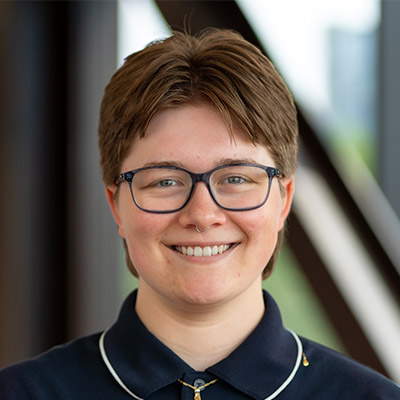
Molly Cameron
Recruitment Officer
Hey, I’m Your Personal Admissions Advisor for Huron
Book a Zoom call with me!

Akshita Sansanwal
Senior Recruitment Advisor
Hey, I’m your personal admissions advisor for Huron
akshita.sansanwal@huron.uwo.ca
Book a Zoom Call with me!
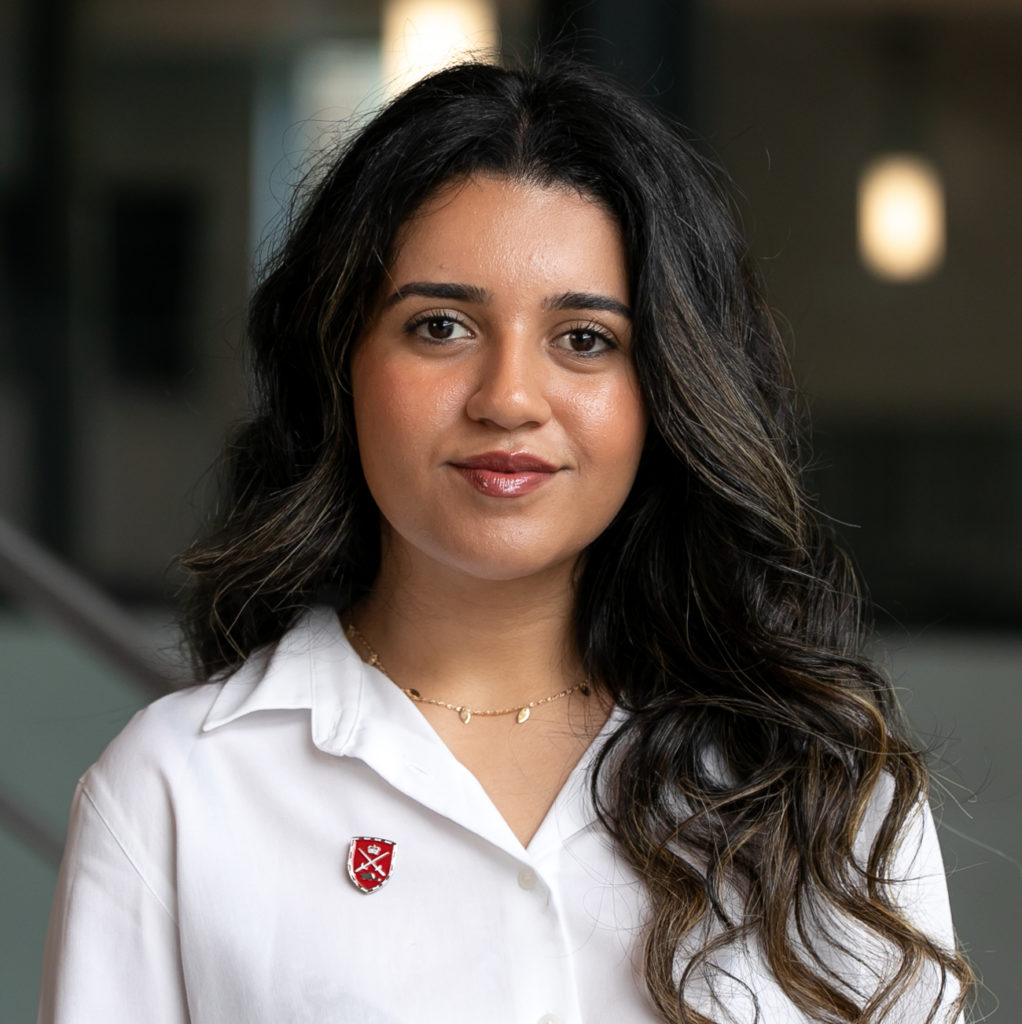
Zayn Nasser
International Admissions Advisor, Africa & Europe
Hey, I’m your personal admissions advisor for huron
Email: zayn.nasser@huron.uwo.ca
Calendly: calendly.com/zaynnasser
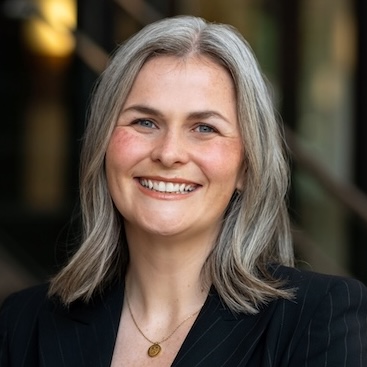
Linea Dacosta
Director, Recruitment
Hey, I’m your personal admissions advisor for huron
Book a Zoom Call with me!

Ipek Aydin
Recruitment Specialist, Türkiye
Hey, I’m your personal admissions advisor for huron
Book a Zoom call with me!
 Lisa Jones Keenan is the Vice President of Sales at Xplornet Communications, the largest rural fixed wireless broadband service provider in Canada.
In her work, Jones Keenan is known for fostering positive company cultures and productivity. She credits transferrable skills for her ability to move into roles she may not have otherwise considered. With the ever-evolving demands of the modern economy, ensuring young people can similarly adapt within new industries is one of the reasons Jones Keenan joined Huron’s Board of Governors.
“It might be presumptuous to say that a university has a social and moral prerogative to develop well-rounded, well-intentioned people,” Jones Keenan states. “But, at Huron you don’t have to suggest it – the university’s sense of obligation to form people who will benefit humanity is built into everything Leadership does.”
Jones Keenan has kept leadership development at the forefront of her career. When talking about the immediate need for an education that develops people skills and leadership potential, she emphasizes how Huron’s unique model of teaching can transform our future economy.
“So much of what I do focuses on coaching people who are already well-established in their careers yet still need that encouragement to be compassionate and empathetic in the office,” Jones Keenan shares. “To be able to start that learning in post-secondary school will not only be such a benefit to our students, but to the business world more broadly.”
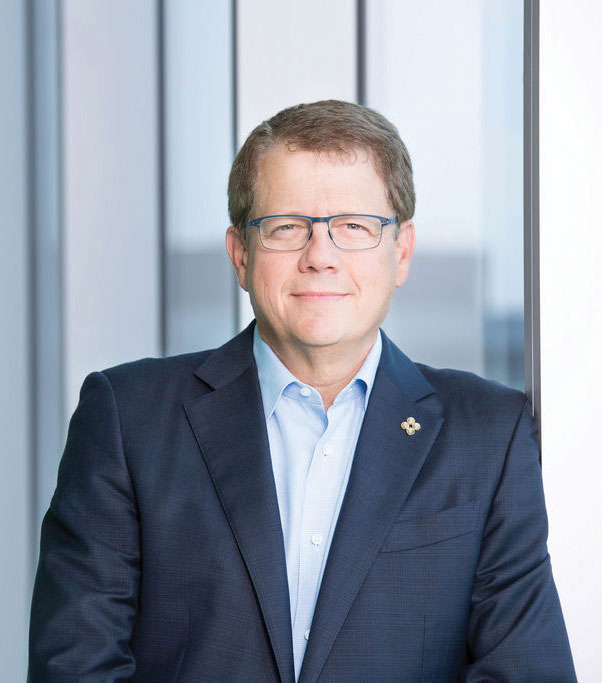
Mr. Medline has been appointed President & Chief Executive Officer of The Woodbridge Company Limited (“Woodbridge”), effective January 5, 2026. Woodbridge is the primary investment vehicle for the Thomson family of Canada. It has a number of investments, including a majority stake in Thomson Reuters.
Mr. Medline is the former President & Chief Executive Officer of Empire Company Limited and Sobeys Inc. He served in the role from January 2017 to November 2025, when he formally retired from the company. Under his leadership, Empire was transformed in terms of sales growth and profitability, it more than tripled its stock price, acquired grocery brands Farm Boy and Longo’s, and launched a new loyalty program.
Mr. Medline has held senior retail leadership positions at Canadian Tire Corporation (CTC), including President & Chief Executive Officer of CTC. He began his career working with the Ontario Securities Commission, followed by two years practicing law with McCarthy Tétrault. He was Corporate Counsel for PepsiCo Canada before moving to Abitibi Consolidated Inc. where he held a variety of roles including Senior Vice President, Strategy and Corporate Development.
Mr. Medline serves on the Board of Directors for Scotiabank, and as Chair of the Board’s Corporate Governance Committee. He also serves on the Board of Trustees for SickKids (and Chair of the Human Resources Committee), the Board of Governors for Huron University College at Western University, and as a trustee on the William & Mary Business School Foundation Board. He is past Chair of the Retail Council of Canada as well as The Grocery Foundation, and was formerly on the Board of Governors for Canada’s Sports Hall of Fame, Board of Directors for The Sobey Foundation, SickKids Foundation and The Black North Initiative.
In recognition of his industry contributions and transformational leadership, Mr. Medline was honoured as the Globe and Mail CEO of the Year in 2018, Canada’s Most Admired CEO for 2020 by Waterstone Capital and with the 2024 Trailblazer Award by the Retail Council of Canada for his outstanding service and dedication to the Canadian retail and grocery industries. In 2025, Mr. Medline was honoured with the 2025 Principled Achievement Award from the Raymond A. Mason School of Business at William & Mary, as well as the 2025 Golden Pencil Award presented by the Food Industry Association of Canada for his outstanding service to the grocery retail industry.
Mr. Medline holds an MBA from Raymond A. Mason School of Business, William & Mary; an LL.B. from the University of Toronto; and a BA from Huron University College at Western University.
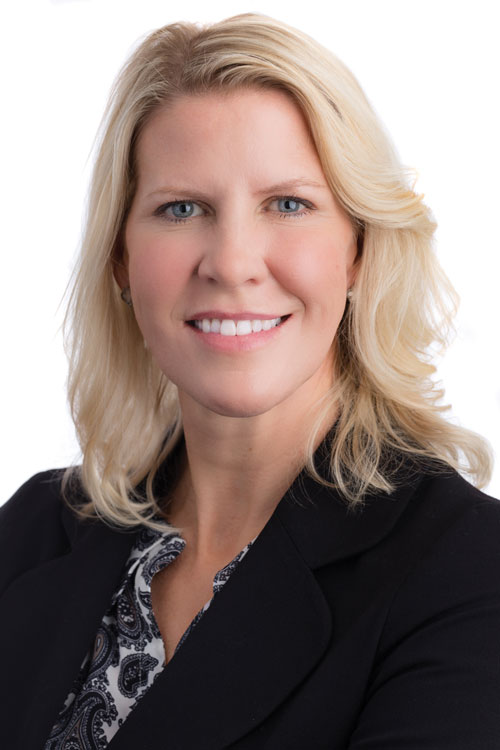 Leigh Allen is the AVP, Global Strategic Research, Reinsurance Group of America Inc., one of the world’s largest global life and reinsurance companies.
As a proud Huron ‘93 alumna, Allen says she was both thrilled and honoured when asked to join the Board. “I love the Leadership with Heart campaign,” she shares. “I’m excited to be part of this and will work to help Huron differentiate itself and become a destination for a Liberal Arts education in Canada.”
Allen graduated from Huron with a degree in Psychology. After having worked in consulting, at the United Nations and now the reinsurance industry, she says her Liberal Arts education has helped her in achieving these positions and opening doors.
“A Liberal Arts background gives you a bit more latitude to explore your personality and interests, strengths and dislikes – there’s a lot of opportunity,” she says. “There’s more appetite to go in different directions.”
Having also volunteered her time with the London Goodenough Association of Canada, which fosters alumni development and community relations, Allen is enthusiastic for her work on the Board of Governors. Huron, she says, is the perfect university in which to produce future leaders and change makers.
“We need to develop future generations to be broad thinkers and open to inclusivity,” she says. “I met a lot of people here who are amazing and I’ve kept those bonds and ties even when we’re in different countries.
“It’s unusual to have those relationships, a sense of community and belonging, but Huron fosters these with ease.”
 Yola Ventresca is a Managing Partner, Lerners LLP, Secretary of Huron’s Board of Governors and a Huron Class of ’02 alumni. Selected as one of Canada’s “Best Lawyers,” she is passionate about the value of Liberal Arts in helping students succeed in their careers.
“Not only does it prepare you to be very successful within your profession, but this type of well-rounded programming forms you as a person,” she says. “People have lost this communal sense of what the Liberal Arts can offer, and I am going to support a change in that narrative in any way I can.”
Outside of law, Ventresca is committed to improving her community whether through volunteer work with community organizations or promoting the advancement of women in the legal profession. As a member of Huron’s Board of Governors, she says she is excited for the role she can personally play in shifting systemic inequalities and preparing students to positively influence others through empathetic and inclusive decision making.
“A Leader with Heart has an academic inclination, but they are also highly emotionally intelligent and compassionate towards people who differ from them,” she says. “As a lawyer, I see the importance of this type of leader every single day. I have a real desire to encourage people to recognize the value of that flexibility in thought and critical capacity that allows my colleagues to really engage with people from all walks of life.”
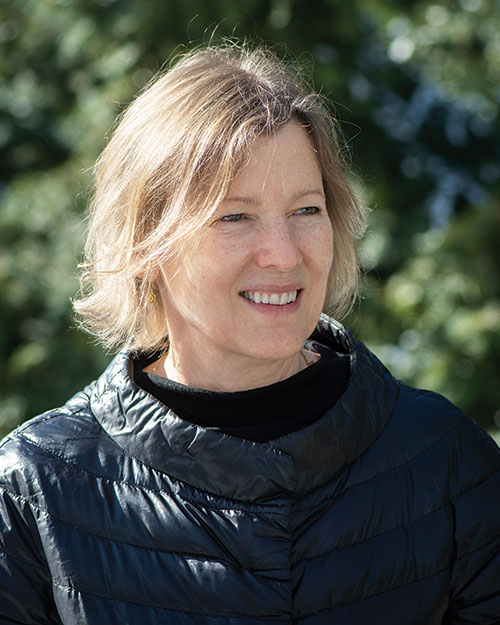 Susan Farrow is an Assistant Professor in The Temerty Faculty of Medicine at the University of Toronto and a Founding Partner and Co-Director of The Toronto Institute of Group Studies, an organization offering certified training and education in group leadership.
“Our public education systems have recently been more focused on STEM subjects (science, technology, engineering, and math), which are extremely important,” says the Huron ’85 alumni. “However, we cannot lose the significant value of the humanities – the subjects that truly help educate us to communicate, better understand each other, and be caring and decent human beings.”
Farrow has been a committed clinician and educator throughout her career, with expertise in mental health and psychotherapy. High on her list of priorities as a member of the Board of Governors will be to ensure there is a real focus on the student experience, and their wellbeing, particularly with respect to mental health.
Saying she was “honoured” to be asked to join the Board, Farrow notes she was already avidly watching Huron’s commitment to creating Leaders with Heart. “This focus on developing and giving back to our communities is essential for us to make both the local and global changes that are so necessary to our world today,” she says.
Farrow remembers her Huron experience as “an amazing learning environment” and hopes to give back to Huron to express her gratitude for the incredibly positive impact Huron has had on her life.
 Frank Holmes is CEO and Chief Investment Officer of U.S. Global Investors, as well as a business commentator, philanthropist and Huron Class of ‘78 alumnus. Holmes also serves as the Executive Chairman of HIVE Blockchain Technologies, the first cryptocurrency mining company to go public in 2017.
Born in Toronto, ON, Holmes says he was exposed to many different cultures and socio-economic backgrounds as a child. As a result, he says he developed a determination to leverage the capacity he built through U.S. Global Investors to invest in charities that give underserved kids a leg up.
“My goals have always been to create economic growth and a better well-being for the communities I work within,” he says. “I have always believed in giving back and, as you become more readily able to do so, you should recognize your obligation to invest in the people and spaces around you.
“That giving mentality has to go hand-in-hand with prosperity.”
In recent years, Holmes has reconnected with Huron, intrigued both by the school’s academic offerings and its commitment to civic engagement. His forward-looking vision aligns well with the university’s commitment to innovating and strengthening itself as an international leader with the same growth mindset it will foster within its students.
“Good leaders have a growth mindset,” he says. “They are not forced into learning, but instead are naturally curious and excited about taking the initiative to challenge their own preconceived notions. Huron is nurturing a new generation of students who are inspired to be transparent and accountable. Not only do they have drive, but their high achievement is underlined by a willingness to disrupt the status quo and give back.
“Who wouldn’t get excited about that?”
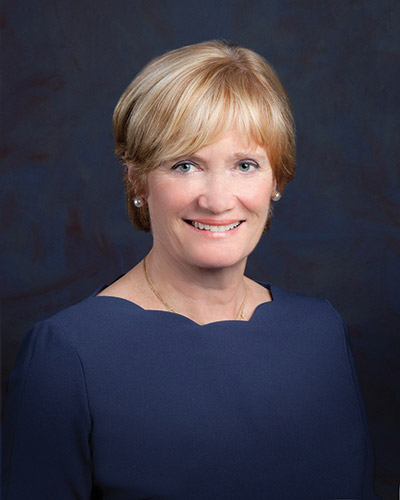 Kelly Meighen is an experienced philanthropist and volunteer. In her role as president of the T.R. Meighen Family Foundation, she has created a legacy of volunteerism and philanthropic giving in the areas of youth mental health advocacy, environmental conservation and cultural vibrancy.
A Huron Class of ’71 alumnus, Meighen also holds an honorary Doctor of Divinity from Huron, conferred to her on the 156th Founder’s Day. She is putting strategic planning and governance skills to work as part of Huron’s Board of Governors to help amplify the school’s as an elite Liberal Arts institution with an inclusive environment designed to welcome people from all backgrounds.
“Huron’s advantages have always been obvious to the people who appreciate that kind of an environment,” she says. “My hope is that our Board can help broadly share the vision of the school as I cannot imagine how it would not resonate with a very broad and enthusiastic audience.”
Meighen says Huron’s emphasis on personalized support, equitable opportunity and community integration has never been so important.
“Now, we just need to ensure our message reaches everyone who recognizes the mutual benefit of intellectual pursuit and personal development,” she says. “Huron’s intention to deliver an education that prioritizes the student as an individual while fostering their role within society will no doubt benefit both learners and their communities alike.”
 Ranjita is Executive Chair of the Oxford Global Partnership, advising investors, businesses, family offices and entrepreneurs on sustainable, inclusive and responsible value creation. A Business Fellow at Oxford University’s Smith School, Ranjita engages with companies on pursuing value with values, and teaches a postgraduate “Essentials of ESG & DEI” course.
Rajan’s passion and professional raison d’être is supporting and shaping imaginative organizations and businesses as exemplars of outstanding value creation, responsible governance and equitable, inclusive net-zero sustainable development (“NZSD”). Over a decade at McKinsey & Co, Rajan advised public, private and family-owned businesses in retail, telecoms, energy, mining, banking, finance on value creation. She was a founding member of McKinsey’s Climate Change Special Initiative, today its Sustainability Practice. Rajan started her career as a macroeconomist in Africa and Asia, negotiating financing for structural adjustment and sustainable development projects and laying the foundations for NZSD as a non-negotiable.
Rajan is also Founder of the Karta Initiative, a global social mobility movement, building technology, finance, and networks to bridge the divide between ‘base of pyramid’ youth and world leading universities and employers in Canada, India and the UK.
Rajan’s passion for inclusive prosperity comes from a childhood spent in rural, remote Liberia where she witnessed how accident of birth is a key driver of life outcomes. Here, she saw firsthand how the basic necessities, such as running water and electricity, are markers of privilege for many people. At the same time, Rajan says “even a tiny drop of opportunity and access to education or training” can make a tremendous difference to nurture potential and improve equality of outcomes.
“In the early days of Karta, we reached out to Canadian universities to explore their interest in international inclusion, and I was introduced to Barry. It did not take long to realize we were totally, utterly mission aligned,” she says. “What we wanted – and are both still working hard to achieve – is the removal of barriers to opportunity so a more representative group of young people can excel and thrive in world class environments.”
As a member of Huron’s Board, Rajan is excited to support Huron as a world class university, globally celebrated for its world class education and advancement of inclusive prosperity, social mobility, and equitable NZSD.
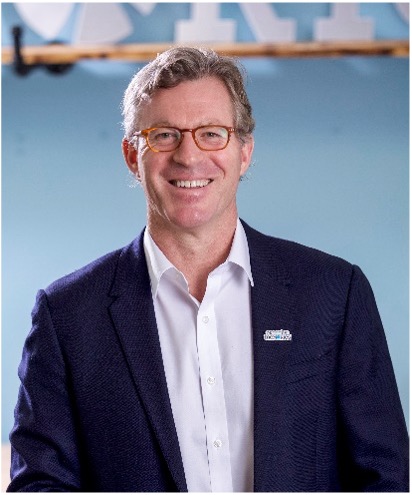 Caleb Hayhoe is the Founder & Chairman of Flowerdale Group and a Huron Class of ’85 Alumnus. Flowerdale Group is a Hong Kong based family office with a global investment outlook across public markets, real estate and private investment. Hayhoe previously spent over ten years building a global sourcing business together with an exceptional team, and remains committed to entrepreneurialism and helping great ideas become sustainable companies.
Hayhoe prioritizes character above all else when looking at who and what to invest in. “I have hired hundreds of people, and what I always look for is how people do things,” Hayhoe says. “As the world becomes increasingly globalized, businesses have access to countless intelligent, qualified people. However, cultural capital is what really counts: you need to be willing to learn, work well with people from diverse backgrounds and accept ideas that starkly differ from your own.”
Hayhoe, who currently lives in London, UK, remains an avid believer in the value of a Liberal Arts education. As a member of Huron’s Board of Governors, he hopes to reaffirm and support the responsibility of educational institutions to develop graduates who have integrity and who recognize the importance of balancing financial success with social responsibility.
He looks forward to working with Huron’s Board of Governors to create a legacy at Huron that stands for the core fundamental values of treating people with dignity and respect and acting in the best interests of society.
“I am excited about the opportunity to help my alma mater become an even more representative and dynamic school that emphasizes integrity, celebrates uniqueness and never loses that sense of home it had when I attended,” he says.

Alexandra Vargas
International Admissions Advisor,
Latin America & Caribbean
Hey, I’m your personal admissions advisor for huron
Book a Zoom Call with me!
Akshita Sansanwal
Senior Recruitment Advisor
Hey, I’m your personal admissions advisor for Huron
akshita.sansanwal@huron.uwo.ca
Book a Zoom Call with me!
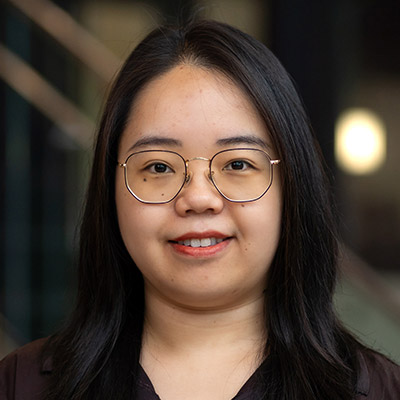
Danni Shi
Senior Admissions Advisor
Hey, I’m your personal admissions advisor for huron
Tel / WeChat: +86 13761280131
Book a Zoom Call with me!